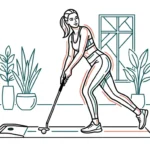

There’s a common saying in golf: “Drive for show, putt for dough.” But what about the shots in between, especially those critical ones around the green? Learning to master golf chipping technique is arguably one of the fastest ways to shave strokes off your score and transform your short game from a source of frustration into a powerful scoring weapon. This guide will demystify chipping, offering practical insights and techniques tailored for women golfers looking to gain confidence close to the hole.
The Chipping Mindset: Control, Not Power
Before we even talk about grip or stance, let’s address the mindset. Chipping is about control, touch, and understanding how the ball will react when it lands. It is not about hitting the ball hard. Instead, it is about guiding it with finesse. Embrace the idea of a ‘mini-swing’ where accuracy triumphs over distance every time. Ultimately, a calm and focused approach will serve you well.
Essential Setup for Effective Chipping
A consistent setup is the cornerstone of a reliable chipping game. Small adjustments here can make a huge difference. Consequently, paying attention to these details will improve your results.
Grip: Light and Low
For chipping, choke down on the club slightly. This gives you more control over the clubhead. Use a lighter grip pressure than your full swing, but still secure enough to prevent the club from twisting. Many pros use a putting grip or a slightly modified interlocking/overlapping grip for chipping. Furthermore, a relaxed grip can enhance your feel for the shot.
Stance: Narrow and Open
Take a narrower stance than your full swing, with your feet only a few inches apart. Your lead foot should be slightly open, pointing towards the target. Your body should also be aligned slightly open to the target line. This promotes a natural swing path that cuts across the ball slightly, encouraging a clean strike. Therefore, this setup helps achieve the desired ball flight.
Ball Position and Weight Distribution
Position the ball slightly back of center in your stance, closer to your trail foot. Crucially, shift about 60-70% of your weight onto your lead foot and keep it there throughout the swing. This encourages a downward strike, ensuring you hit the ball first, then the turf. Moreover, maintaining this weight distribution prevents scooping the ball.
The Chipping Stroke: A Mini-Swing with Purpose
The chipping stroke is often described as a pendulum motion, primarily driven by the shoulders and arms, with minimal wrist hinge. This technique helps you maintain control and consistency. Consequently, many golfers find this approach highly effective.
Keep it Simple: Shoulders and Arms
Think of your shoulders and arms moving as a unit, forming a triangle that stays largely intact. Your wrists should remain relatively firm, minimizing excessive hinge or ‘flipping’ at the ball. The backswing will be short, dictated by how far you want the ball to go. In addition, this simple movement helps prevent common chipping errors.
Accelerate Through Impact
This is perhaps the most vital element: always accelerate through the ball. Decelerating often leads to ‘blading’ the ball (hitting it thin) or ‘fat’ shots (hitting the ground before the ball). The length of your follow-through should generally mirror the length of your backswing, ensuring a smooth, consistent motion. Specifically, maintaining acceleration ensures a crisp strike.
The Role of Your Body
While your shoulders and arms drive the stroke, your lower body remains relatively quiet. There is minimal hip rotation. Instead, your core provides stability. Your eyes should stay focused on the ball through impact. This helps maintain a steady head position. As a result, you are more likely to hit the ball cleanly.
Choosing the Right Club for Your Chip
Selecting the correct club is paramount for successful chipping. It’s not always about using your most lofted wedge. Sometimes, a less lofted club can be more effective. For example, a pitching wedge or even a 9-iron can be excellent choices depending on the shot.
The Loft-and-Roll Principle
Consider the “loft-and-roll” principle. A more lofted club (like a sand wedge or lob wedge) will make the ball fly higher and roll less. Conversely, a less lofted club (like a 9-iron or pitching wedge) will fly lower and roll more. Assess the distance you need to carry the ball over an obstacle (like a fringe or rough) versus the distance you need it to roll once it lands. This assessment is crucial for effective short game play. Furthermore, understanding this principle will significantly improve your chipping strategy, much like understanding Women’s Golf Course Strategy helps with overall game management.
Practice with Different Clubs
Don’t just stick to one club for chipping. Practice with your pitching wedge, gap wedge, sand wedge, and even a 9-iron. This will give you a better feel for how each club performs and how much roll you can expect. Knowing your clubs intimately is a powerful asset around the green. Moreover, this versatility will help you adapt to various course conditions.
Common Chipping Mistakes and How to Fix Them
Even experienced golfers make chipping errors. Identifying and correcting these issues is key to improving your short game. Let’s explore some common pitfalls.
Topping or Blading the Ball
This happens when you hit the top half of the ball, sending it low and fast across the green. Often, it’s caused by lifting your body during the downswing or decelerating through impact. To fix this, ensure your weight stays forward on your lead foot and focus on accelerating your clubhead through the ball. Furthermore, keep your head still throughout the stroke.
Hitting it Fat (Duffing)
Hitting it fat means your club hits the ground before the ball, resulting in a weak, short shot. This is frequently due to shifting your weight to your trail foot during the downswing or having too much wrist hinge. To correct this, maintain your weight on your lead side and keep your wrists firm. Practicing the downward strike is essential. In fact, a good drill is to place a tee just behind the ball and try to hit the ball without disturbing the tee.
The “Yips” Around the Green
The yips are an involuntary twitch or jerk during the chipping stroke, often caused by anxiety. This can be frustrating. To combat this, try to simplify your thoughts and focus on a smooth, rhythmic motion. Sometimes, using a different grip or club can help break the cycle. Mastering Your Mind: Essential Golf Mental Game Tips for Women can offer further strategies for overcoming performance anxiety on the course.
Advanced Chipping Techniques for Every Situation
Once you’ve mastered the basics, you can explore more advanced chipping techniques. These will equip you for various scenarios around the green.
The High Soft Chip (Lob Chip)
This shot is used when you need to get the ball up quickly over an obstacle and have it stop softly. Use your most lofted wedge (sand or lob wedge). Open your stance and the clubface significantly. Keep your weight slightly more centered than a standard chip and use a slightly longer, more flowing swing. Importantly, maintain a soft grip and allow the club’s loft to do the work. Remember, this shot requires practice and confidence.
The Low Running Chip (Bump and Run)
When you have plenty of green to work with and no obstacles, the bump and run is your friend. This shot keeps the ball low and allows it to roll out like a putt. Use a less lofted club, like a 7-iron, 8-iron, or 9-iron. Position the ball further back in your stance and keep your hands ahead of the ball. Use a putting-like stroke with minimal wrist action. This is often the safest and most consistent chipping option. According to PGA.com, the bump and run is a fundamental shot for all golfers.
Practice Drills to Polish Your Chipping Skills
Consistent practice is the secret to improving your chipping. Incorporate these drills into your routine. They will help you solidify your technique and build confidence.
The One-Club Challenge
Take one club (e.g., a pitching wedge) and practice chipping to various targets from different distances. Focus on adjusting your swing length to control distance. This drill helps you understand the versatility of a single club. Furthermore, it enhances your touch and feel.
The Landing Spot Drill
Imagine a small target area on the green where you want the ball to land. Place a towel or a small marker there. Practice hitting chips, aiming to land the ball on your target. This helps improve your distance control and vision. Consequently, you will develop a better understanding of how the ball reacts.
The Gate Drill
Place two alignment sticks or clubs parallel to each other, forming a narrow “gate” slightly wider than your clubhead. Practice chipping through this gate. This drill helps ensure your club path is straight and consistent. It also helps you to master golf chipping technique by keeping your club on plane. For more structured practice, consider exploring a Personal Golf Launch Monitor to get data-driven feedback on your chipping metrics.
Integrating Chipping into Your Overall Game
Chipping isn’t an isolated skill; it’s an integral part of your short game strategy. Knowing when and how to chip effectively ties into your overall approach to the course. Therefore, consider how chipping fits into your broader game plan.
Course Management and Chipping
Before each shot, analyze the lie, the distance to the pin, and any obstacles. Decide whether a chip is the best option. Sometimes, a putt from off the green or even a pitch shot is more appropriate. Making smart choices around the green can save many strokes. This strategic thinking is vital for every golfer, as highlighted by resources like USGA Rules of Golf regarding the green.
Confidence is Key
Believe in your ability to execute the shot. Visualize the ball flying to your target and rolling into the hole. A positive mental attitude can significantly impact your performance. Remember, every golfer, including beginners, can learn to chip effectively. It simply requires practice and patience. After all, building confidence is a journey, not a destination.
Conclusion: Master Your Short Game, Master Your Score
Learning to master golf chipping technique is a journey that pays huge dividends on the golf course. By understanding the proper setup, executing a controlled mini-swing, choosing the right club, and practicing diligently, you can transform your short game. Embrace the control, touch, and finesse that chipping demands, and watch your scores consistently drop. She Golfs Better is here to empower you on every step of your golf journey, ensuring you conquer the green with precision and confidence.
FAQ: Frequently Asked Questions About Chipping
What is the most important aspect of effective golf chipping?
The most important aspect is maintaining a consistent setup and accelerating through the ball. Keeping your weight on your lead foot and minimizing wrist hinge also contributes significantly to clean contact and predictable results.
Which golf clubs are best for chipping around the green?
While wedges (pitching, gap, sand) are commonly used, less lofted clubs like a 9-iron or even an 8-iron can be very effective for low-running chips. The best club depends on the distance, the lie, and the desired amount of roll. Experimenting with Women’s Golf Club Selection can help you find your ideal chipping clubs.
How can I improve my golf chipping distance control?
To improve distance control, focus on varying the length of your backswing and follow-through. A shorter swing for shorter chips and a longer swing for longer chips. Practice the