Golf fitness women over 40 is the focus of this guide. Golf is a lifelong passion, and for women golfers over 40, maintaining physical fitness is not just about looking good; it’s about extending your time on the course, preventing injuries, and sustaining a powerful, consistent swing. At She Golfs Better, we understand that a strong body is the foundation for a strong game. This isn’t about becoming a bodybuilder, but about targeted exercises that support the unique demands of the golf swing and counteract the natural changes our bodies experience with age. Therefore, focusing on specific conditioning is vital for women golfers over 40.
This article shares general fitness information for women golfers over 40. It is not medical advice and is not a substitute for guidance from your doctor or a qualified trainer, especially if you have an existing injury or health condition.
Why Targeted Fitness is Crucial After 40
As we age, our bodies undergo natural changes, including a decline in muscle mass, strength, and power, a process often called sarcopenia, which research indicates can begin as early as a woman’s thirties and accelerates with each decade (NIH News in Health). For golfers, this can translate to reduced clubhead speed, less stability, and an increased risk of injury. A proactive fitness regimen specifically designed for golfers over 40 is essential to mitigate these effects and keep you playing your best. Moreover, understanding these physiological shifts empowers you to train smarter.
Counteracting Sarcopenia: Maintaining Power
Targeted strength training helps to preserve and even build muscle mass, directly translating to more power in your swing. This isn’t just about hitting the ball further; it’s about generating effortless power, reducing strain, and maintaining the fluidity of your motion. By focusing on specific muscle groups, you can ensure your body is primed to deliver a consistent, strong swing round after round. In fact, consistent strength work is one of the best ways to work against age-related muscle loss, according to the same NIH research cited above.
Injury Prevention for Sustained Performance
Golf, while often perceived as low-impact, puts significant rotational stress on the body, particularly the lower back, shoulders, and hips. As we age, flexibility can decrease, and joints can become more vulnerable. A comprehensive fitness program that includes strength, flexibility, and core stability exercises is one way golfers try to reduce the risk of common golf injuries, which the American Academy of Orthopaedic Surgeons describes in detail (OrthoInfo, AAOS). Consequently, a well-rounded approach to physical conditioning is paramount.
Key Exercises for a Powerful & Stable Swing
Based on current trends in golf-specific fitness, these exercises are commonly recommended for women golfers over 40 who want to support their game and their physical well-being. They focus on the core, lower body, and rotational power, all components many coaches consider central to a golf swing. Specifically, integrating these movements into your routine, with your doctor’s guidance if you have any health concerns, may support noticeable improvements over time.
Building Core Strength: Dead Bugs & Cable Rotations
Your core is the powerhouse of your golf swing, providing stability and transferring energy from your lower body to your upper body. It’s the central link in the kinetic chain. Therefore, a strong core is indispensable for efficient power transfer.
- Dead Bugs: This exercise enhances core control and stability without putting stress on the lower back. Lie on your back, knees bent, arms extended towards the ceiling. Slowly lower your opposite arm and leg, keeping your lower back pressed into the floor. Return to the start and repeat on the other side. Aim for 3 sets of 10-12 repetitions per side. This movement helps build foundational core strength.
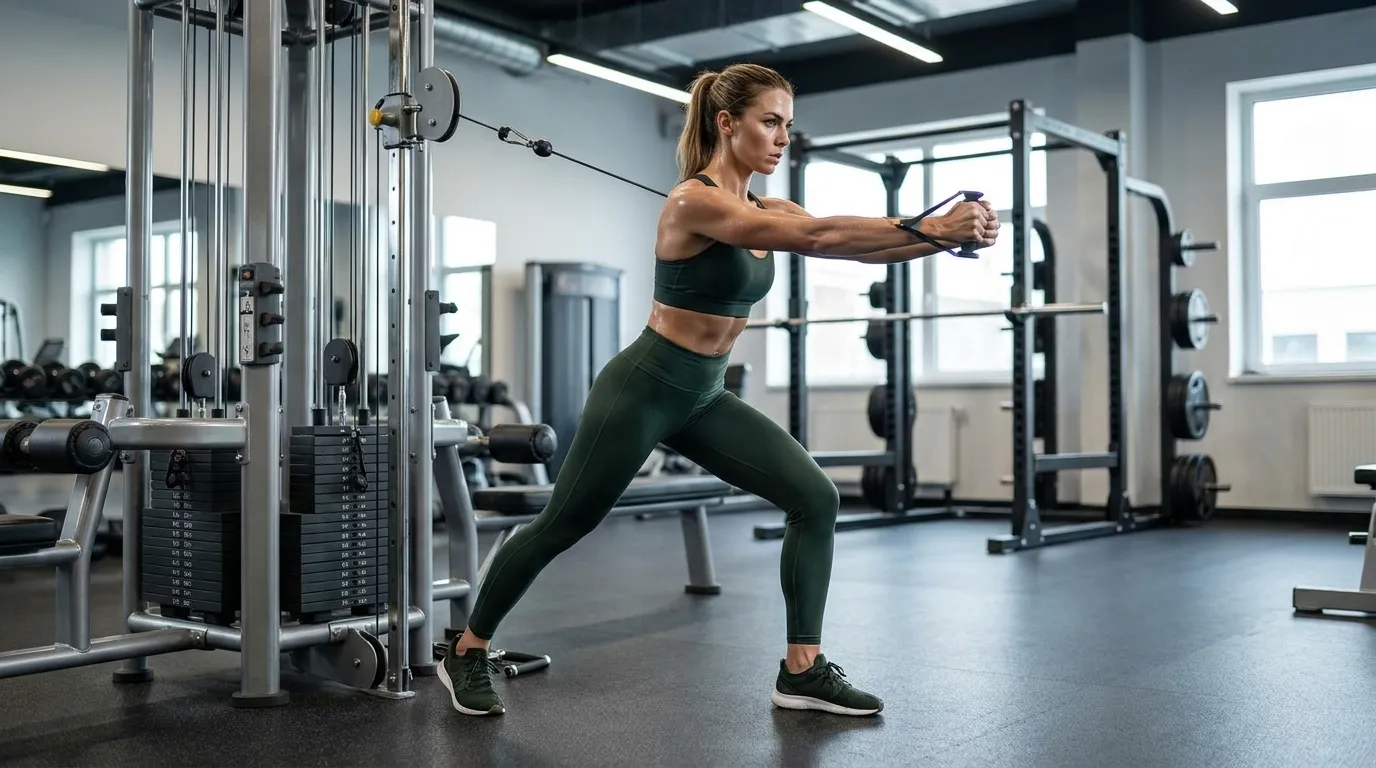
- Cable Rotations (or Resistance Band Rotations): This exercise mimics the rotational movement of the golf swing, building power and stability. Stand sideways to a cable machine (or anchor a resistance band), holding the handle with both hands at chest height. Rotate your torso away from the machine, pulling the cable across your body. Control the return motion. Perform 3 sets of 10-12 repetitions on each side. Remember to pivot your back foot naturally.
Enhancing Lower Body Power: Glute Bridges & Goblet Squats
The lower body generates significant power in the golf swing. Strong glutes and quads are essential for a stable base and explosive drive through impact. Furthermore, they contribute to endurance on the course.
- Glute Bridges: Lie on your back with knees bent, feet flat on the floor, hip-width apart. Lift your hips towards the ceiling, squeezing your glutes at the top. Hold briefly, then slowly lower. This strengthens the glutes and hamstrings, which many trainers consider useful for hip extension in the swing. Do 3 sets of 12-15 repetitions.
- Goblet Squats: Hold a dumbbell or kettlebell vertically against your chest. Stand with feet slightly wider than shoulder-width, toes pointing slightly out. Lower into a squat, keeping your chest up and back straight. Go as deep as comfortable, then push through your heels to return to standing. This builds overall lower body strength and mobility. Aim for 3 sets of 10-12 repetitions.
Improving Mobility & Flexibility: Thoracic Rotations & Hip Flexor Stretches
Flexibility and mobility are often overlooked but matter for a full, uninhibited swing and for reducing injury risk. Specifically, improving your range of motion may add distance to your drives over time. When considering golf fitness for women over 40, these elements are worth prioritizing.
- Thoracic Rotations (Seated or Kneeling): Sit on a chair or kneel on the floor with your hands behind your head. Rotate your upper back (thoracic spine) from side to side, keeping your lower back stable. This supports the rotational mobility many instructors associate with a fuller backswing and follow-through. Perform 3 sets of 10-12 rotations per side.
- Hip Flexor Stretches: Kneel on one knee with the other foot flat on the floor in front of you (lunge position). Gently push your hips forward until you feel a stretch in the front of the hip of your kneeling leg. Hold for 30 seconds, then switch sides. Tight hip flexors can restrict your swing and contribute to lower back discomfort for some golfers, a pattern noted by the American Academy of Orthopaedic Surgeons (OrthoInfo, AAOS). Regularly stretching them is a key aspect of golf fitness for women over 40.
The Importance of Warm-up and Cool-down
Every fitness session and every round of golf should begin with a proper warm-up and end with a cool-down. This is especially true for women golfers over 40. A dynamic warm-up prepares your muscles and joints for activity, increasing blood flow and range of motion. Conversely, a cool-down helps reduce muscle soreness and supports overall flexibility. These routines are simple but widely recommended for reducing injury risk and supporting performance.
Dynamic Warm-up Before Your Round or Workout
Before stepping onto the first tee or starting your workout, dedicate 5-10 minutes to dynamic movements. These are not static stretches but movements that take your joints through their full range of motion. For example, arm circles, leg swings, torso twists, and walking lunges are common choices. This preparation helps to prime your body for the rotational and power demands of the golf swing. Furthermore, many trainers believe it helps reduce the risk of strains or pulls, though individual results vary.
Cool-down for Recovery and Flexibility
After your round or workout, spend 5-10 minutes on static stretches, holding each stretch for 20-30 seconds. Focus on the major muscle groups used in golf: hips, hamstrings, glutes, shoulders, and back. This helps to improve flexibility, reduce muscle stiffness, and support recovery. A cool-down is a sensible part of any golf fitness routine for women over 40, allowing your muscles to return to their resting length and helping to prevent tightness.
Nutrition and Hydration: Fueling Your Game
Fitness isn’t just about exercise; it’s also about what you put into your body. Proper nutrition and hydration support energy, recovery, and overall well-being, particularly for women golfers over 40. Your dietary choices can affect your stamina, focus, and muscle repair, all relevant to a full day on the course. Furthermore, adequate hydration helps prevent fatigue and supports cognitive function (Mayo Clinic).
Eating for Energy and Recovery
Focus on a balanced diet with lean protein, complex carbohydrates, and healthy fats. Protein supports muscle repair, while complex carbs provide sustained energy. Healthy fats play a role in hormone balance and nutrient absorption, according to Harvard’s nutrition research (The Nutrition Source, Harvard T.H. Chan School of Public Health). Incorporate fruits and vegetables for vitamins, minerals, and antioxidants. For instance, a meal of grilled chicken, quinoa, and a colorful salad is a reasonable choice before a round. Post-round, a protein shake or Greek yogurt may aid in muscle recovery. The Mediterranean diet is a framework cited by Mayo Clinic for overall health, and it can be a useful starting point to discuss with your own healthcare provider.
Staying Hydrated on and off the Course
Dehydration can affect performance, contributing to fatigue, reduced concentration, and muscle cramps (Mayo Clinic). Drink water throughout the day, not just when you’re thirsty. On the course, carry a water bottle and sip regularly. Electrolyte-rich drinks can be useful during long, hot rounds to help replace lost minerals. Even mild dehydration may affect swing mechanics and decision-making for some golfers, so consistent fluid intake is worth prioritizing.
Incorporating Rest and Recovery
Exercise is only half the equation; rest and recovery matter too, especially for women golfers over 40. Your muscles need time to repair and rebuild after workouts. Without adequate rest, you risk overtraining, injury, and burnout. Consequently, prioritizing recovery supports continuous improvement and longevity in the sport.
The Power of Sleep
Most adults are advised to get 7-9 hours of sleep each night (CDC). During sleep, your body carries out repair processes that support muscle recovery. Sleep also supports focus and decision-making on the course. Insufficient sleep can diminish energy levels and affect physical performance (CDC). Thus, treating sleep as a real part of your golf fitness routine is worth the effort.
Active Recovery and Stress Management
Active recovery, such as light walking, yoga, or stretching, can help support blood flow and reduce muscle soreness without adding heavy stress to your body. Additionally, managing stress through mindfulness, meditation, or hobbies may positively affect your physical health and golf game, since chronic stress is linked to inflammation that can slow recovery (American Psychological Association). Golf Distillery offers insights into the mental game, which connects closely with physical recovery.
Making Fitness a Sustainable Lifestyle
The key to success with golf fitness for women over 40 is consistency and sustainability. It’s not about quick fixes or intense, short-term programs. Instead, it’s about integrating these practices into your daily life in a way that feels empowering and enjoyable. Start slowly, listen to your body, and check with your doctor before changing your activity level if you have any health concerns. Remember, every swing counts, and every step towards better physical health contributes to a stronger, more confident you on the course.
Conclusion: Own Your Fitness, Own Your Game
Golf fitness for women over 40 comes down to a handful of consistent habits: build core and lower-body strength, protect your mobility, warm up with purpose, fuel and hydrate well, and give your body the rest it needs to recover. None of this requires a dramatic overhaul overnight. Pick one or two exercises from this guide, add them to your week, and build from there. This article is general information, not personalized medical or fitness advice, so talk with your doctor or a certified trainer before starting a new routine, particularly if you have an existing injury or health condition. What is one small change you could make to your routine this week? Own your game.
FAQ Section
What are the most important fitness areas for female golfers over 40 to focus on?
For women golfers in this age group, the areas many trainers emphasize are core strength, lower body power, and overall flexibility and mobility. These components relate to swing efficiency, power generation, and injury-risk reduction, which matter for continued enjoyment and performance on the course. Furthermore, balance training is also commonly recommended.
How often should I engage in golf-specific exercises after 40?
Many trainers suggest 2-3 structured golf-specific exercise sessions per week, combined with daily dynamic warm-ups and cool-downs, though your own plan should reflect your health history and goals. Consistency tends to matter more than intensity. Listen to your body and allow for rest days between strength training sessions. Even short, consistent workouts can make a difference for some golfers.
Can strength training really help my golf game as I get older?
Strength training is one of the ways golfers try to work against age-related muscle loss and support power in the swing, per the NIH research cited above. It may help with clubhead speed, stability, and a lower risk of some common golf injuries. Stronger muscles can contribute to a more controlled swing, which many golfers find supports a more confident, consistent round, though individual results vary from golfer to golfer.
What if I have pre-existing conditions or joint pain?
If you have pre-existing conditions or joint pain, talk with your doctor or a physical therapist before starting any new fitness program. They can help tailor exercises that are appropriate for your specific needs, so you can work on strength without aggravating existing issues. Modifications can always be made to fit your comfort and safety.
Beyond exercise, what other lifestyle changes support better golf performance for mature women?
Beyond targeted exercise, a broader approach to wellness can support your golf game. This includes balanced nutrition, staying hydrated, getting adequate sleep, and managing stress. These lifestyle factors relate to overall energy levels, mental clarity, and physical recovery, all relevant to a consistent and enjoyable game. As always, this is general information and not a substitute for advice from your own healthcare provider.
Sources
- NIH News in Health — muscle loss with age
- AAOS OrthoInfo — golf injuries
- Mayo Clinic — hydration
- Mayo Clinic — Mediterranean diet
- Harvard T.H. Chan School of Public Health — The Nutrition Source
- CDC — sleep recommendations
- American Psychological Association — stress and the body
- Golf Distillery — the mental game
Explore more: More from She Golfs Better