Women’s golf fashion trends are most useful when you translate a look into an outfit you can actually play in. A coordinated colour palette, a skort silhouette or a streamlined layer may catch your eye, but the important questions arrive in the fitting room: can you swing, bend, reach into a pocket and walk comfortably? Style and practical details can belong in the same outfit.
This guide explores ways to use golf fashion ideas without treating them as verified rankings of this year’s most popular products. It does not claim a particular fabric improves your score or that every woman needs the same cut. You will find specific fit checks, layering choices and a wardrobe-planning method that starts with your course, climate and personal preferences.
Check the course before choosing the look
Read your venue’s current dress guidance or ask the professional shop. Collars, sleeveless tops, leggings and denim may be treated differently by different courses. There is no reason to assume a social media outfit is accepted at your club because it was photographed beside a putting green. For a golf trip, check each booked venue rather than relying on the hotel description.
Once you understand those boundaries, decide what makes you feel like yourself. You might prefer a relaxed polo and trousers, a fitted top with a skort, or a dress designed for golf. A women’s label does not guarantee a comfortable cut, and a smaller size is not an achievement. Choose the garment that works with your body and the day you are planning.
Turn coordinated sets into a flexible wardrobe
A matching top and bottom creates a clear look, but check whether each piece works with items you already own. One patterned garment with plain alternatives may provide more combinations than several outfits that only match themselves. Choose a main neutral, a few colours you enjoy and a layer that works across them. Your palette can be bright, muted or mixed.
Before buying, lay out an actual outfit including shoes, socks and outerwear. A top that looks good by itself may bunch under your jacket or require a bottom you do not own. This simple check makes the purchase about a complete playing outfit rather than about a photograph. You can adopt a style idea without rebuilding the entire wardrobe.
Test a skort as golf clothing, not standing clothing
Check the waistband when you sit, turn and bend to pick up a ball. Look at how the outer skirt moves and whether the inner shorts stay comfortable during walking. A skort that feels fine when standing still can become distracting after repeated movement. Try it with the underwear and shoes you would normally wear on the course if the fitting arrangement permits.
Check pockets separately. Can a ball marker or tee sit securely without digging into your leg? Does the phone pocket pull the fabric out of shape? Is there somewhere convenient for the scorecard if you usually carry one? A pocket that exists on a product page is not automatically useful for your routine.
Give trousers and shorts a movement test
Take your address position and make a gentle swing rehearsal with empty hands. Notice tension across the seat, thighs, knees and waistband. Bend as though retrieving a ball and check whether the garment shifts in a way you dislike. Stretch content alone does not tell you how the cut will feel. The distribution of space matters too.
Inspect the hem with your chosen footwear. A very long hem may drag or become wet, while a cuff can feel different when you sit in a cart. If alterations are possible, include their cost and timing in the decision. Buying the right length can be more useful than buying a garment because a particular silhouette is described as fashionable.
Choose tops with the bag and layer in mind
Reach both arms forward, turn gently and check the sleeve and shoulder seams. Look for pulling around the chest and underarms or a hem that rises beyond your comfort level. If you carry your bag, consider where its strap sits against the fabric and collar. Details that look decorative can become noticeable during repeated contact.
Try the top beneath the layer you expect to use. A bulky sleeve under a close-fitting jacket can restrict your comfort even when both items fit independently. Check zip placement and whether a collar stays comfortable around your neck. You do not need a special technical explanation to reject a garment that feels awkward when you move.
Understand fabric claims before paying more
Words such as breathable, cooling and performance are invitations to ask questions, not promises of a better round. Read the composition, care instructions and the manufacturer’s explanation of the claimed feature. Feel the fabric, consider its thickness and decide whether you like it against your skin. Compare how easy it will be to wash and dry between the rounds you normally play.
If a garment carries a sun-protection rating, examine the label and care guidance rather than assuming all long sleeves provide the same protection. The American Academy of Dermatology’s sun-protection guidance recommends combining shade, protective clothing and sunscreen. An outfit should not be presented as a substitute for the rest of that plan.
Build layers around the weather you face
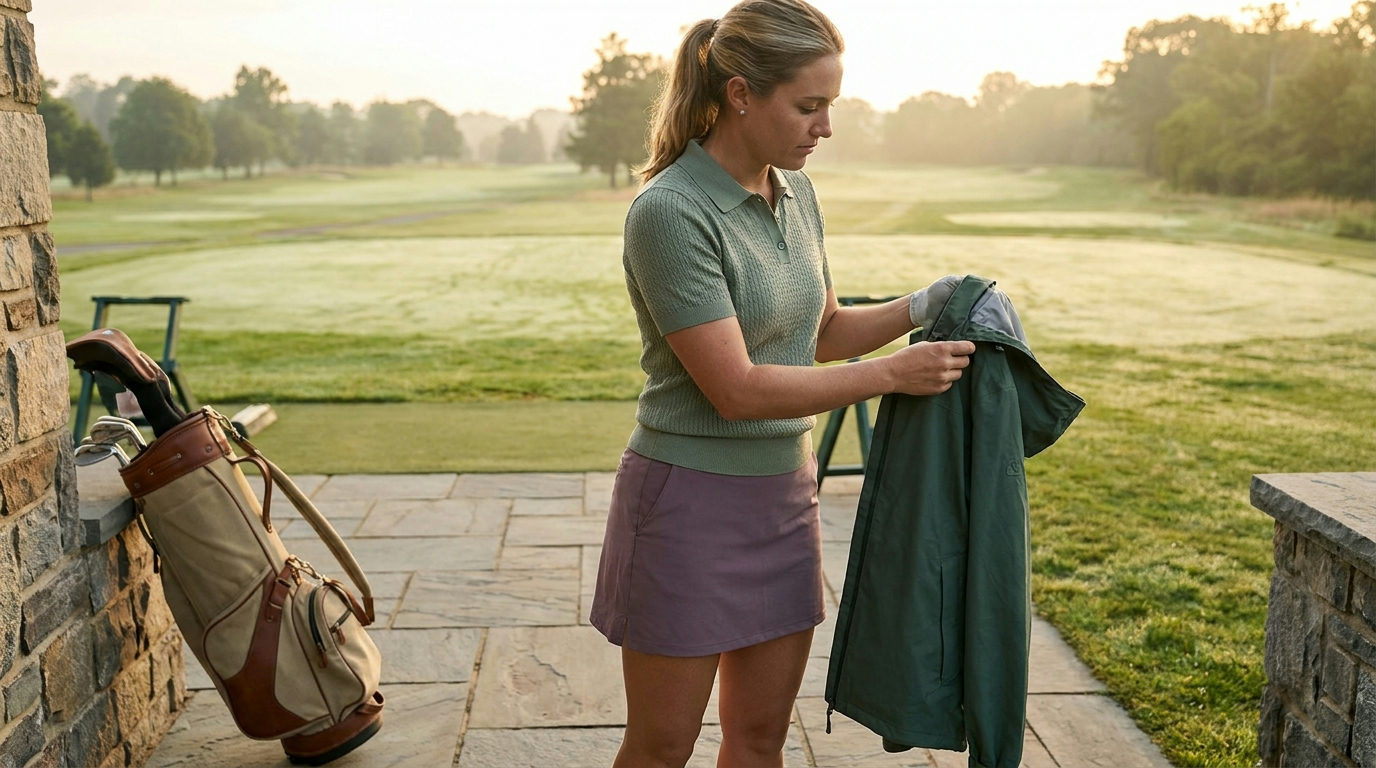
Start with a comfortable base outfit, then decide which additional problems need solving: a cool start, wind, rain or a warmer afternoon. Try the complete combination before play. If you cannot turn comfortably with every layer on, change the combination instead of assuming you will adapt once the round begins.
Check how an outer layer packs away and where it will go in your bag. A jacket that takes up the entire compartment may be inconvenient for a walking round. For rainwear, read the maker’s specific construction and care information rather than treating water-resistant and waterproof as interchangeable labels. Your course conditions and preferences should lead the decision.
Let shoes and socks finish the practical outfit
Try shoes with the socks you expect to wear. Walk, stand and check whether your toes have comfortable space without the heel slipping. Ask about the return policy before wearing them outside. A particular colour can complete your outfit, but it does not make an uncomfortable shoe suitable for a long round.
Check the course’s footwear requirements and whether the sole suits the surfaces you regularly use. Do not assume a spikeless design is accepted everywhere or that a branded golf shoe will fit your foot. If you have ongoing foot pain or a medical concern, seek individual advice. This article is general information, not medical advice.
Treat sustainability language as a specific question
A recycled-material claim can refer to a fabric component rather than the whole garment. Ask what is recycled, in what proportion and whether the claim is documented. The Federal Trade Commission’s Green Guides summary cautions against broad, unqualified environmental claims. A vague green label does not establish the overall environmental impact of an outfit.
You can also consider repairs, alterations and using pieces already in your wardrobe. Those are practical choices, not a claim that one shopping rule produces a measured environmental benefit in every case. Keep care instructions and avoid purchasing a delicate garment you will not maintain. Clothing only contributes to your wardrobe if you can actually use it.
Make a small wardrobe plan before shopping
- List the venue dress requirements and the conditions you normally play in.
- Identify the outfit you already reach for and what you like about it.
- Name one real gap, such as a comfortable rain layer or useful trouser pockets.
- Test the proposed item with at least one complete outfit.
- Confirm fit, care instructions and return terms before buying.
For playing guidance alongside the outfit, the USGA’s practice FAQ is a useful reminder that course activities have their own restrictions. An outfit photographed during a practice session does not tell you what is allowed in an organised competition. Ask about both the dress expectations and the playing arrangements when visiting a new club.
Wear the style that supports your day
Women’s golf fashion trends can provide ideas for colour, silhouette and coordination. The lasting value comes from your own checks: movement, pockets, layering, weather suitability and care. Choose the pieces that help you enjoy being on the course, and leave room for personal taste. You do not have to look like another golfer to belong in the game.